Cherry Capital Foods closed in November, leaving Michigan farmers and produce buyers scrambling to figure out what's next.
This article is part of State of Health, a series about how Michigan communities are rising to address health challenges. It is made possible with funding from the Michigan Health Endowment Fund.
For Michiganders, having access to local farms and foods should be a piece of cake — or something much healthier. With over 44,000 farms, Michigan is the top-ranking U.S. producer of tart cherries, cucumbers, dry beans, squash, and asparagus, and within the top 10 states for a wide range of other agricultural commodities. Even so, getting those healthy foods into the hands and homes of Michiganders remains a distribution challenge.
Traverse City-based Cherry Capital Foods (CCF) helped its surrounding community overcome that challenge for 15 years. A food distributor that focused heavily on building a local food ecosystem, CCF connected small- to mid-sized farmers and small entrepreneurial food producers to local schools, restaurants, and other marketplaces across the state. CCF closed in November, leaving Michigan farmers and produce buyers scrambling to figure out what’s next.
“It’s really difficult to overstate the ways in which local food systems have been positively impacted by Cherry Capital Foods,” says Meghan McDermott, deputy director of the Traverse City nonprofit Groundwork Center for Resilient Communities. “Distribution is one of the essential pieces to making local food systems work.”
CCF was launched in 2008 by Chip Hoagland, an advocate of Michigan’s local food economy and sustainable local food systems.
“Chip’s heart and soul and mission was to build a sustainable and resilient food system throughout the state of Michigan,” says Michael Lahti, CEO of Tamarack Holdings, CCF’s umbrella company. “He has spent, we’ll say, well over $30 million of his own capital to help grow connectivity, all the way from the small local farmer to the corporate consumer retailer … like Martin’s, Meijer, or Spartan [grocery stores]. He has been able to help grow, incubate, and accelerate a variety of food organizations.”

CCF helped farmers with crop planning, labeling, branding, and identifying market opportunities — and was a premiere food distribution partner for the state of Michigan’s 10 Cents a Meal school lunch program, bringing healthy, fresh local foods to kids across the state. CCF partnered with Michigan’s Food Hubs, providing products and, for some, distribution support.
For Michigan schools, restaurants, and markets looking to buy local Michigan foods, CCF offered a single source for a wide variety of local foods from multiple small farms and food entrepreneurs, a single distributor to bill, and certainty that necessary quantities would be available.
“For a lot of different buyers — restaurants and schools, in particular — this closing really creates difficulty,” McDermott says. “Distributors help make the ordering process easier. The sales rep knows what quantities are needed. They can keep it coming. When you have to go to multiple farms or individual vendors, you run into a number of issues.”
Sadly, by 2023, CCF found it could no longer operate its small business in a highly competitive sector dominated by large corporations with lower-cost, higher-volume products and, in many cases, government-subsidized growers. On Nov. 16, 2023, CCF made its last delivery.
“You could go and pick up from a local farm, but who’s going to fund the gas mileage? Who has a refrigerated truck? Who’s going to fund the staff time to do that? Cherry Capital Foods really filled that gap for small and mid-size growers,” McDermott says.
Schools scramble to fill the gap
Lahti says CCF “definitely left its fingerprints on a variety of programming,” notably the 10 Cents a Meal program, which he says CCF supported “from day one.” The program offers schools, early childhood education centers, daycares, and other organizations that participate in USDA Child Nutrition Programs funding of up to 10 cents for each meal served that includes Michigan-grown fruits, vegetables, and legumes. East Jordan Public Schools (EJPS) is one of many Michigan school districts participating in 10 Cents a Meal.
“Cherry Capital’s closing will make our paper trail for reporting our local purchases miles longer,” says Melissa Lyons, head cook at East Jordan Public Schools. “Their invoicing system was streamlined and tailored to send right over to the 10 Cents peeps.”

“CCF just made it really easy for us to order fresh, local things for our district with one order, one billing, and Michigan foods from a little farther away,” adds Jen Lewis, EJPS’ farm-to-school coordinator. “We have relationships with local farmers, but there’s coordinating, ordering, delivery, and billing for multiple things and there’s not going to be the variety available.”
When CCF closed, EJPS immediately reached out to local farmers who were happy to do direct sales. The district will also look to corporate giants like Sysco to fill the gaps.
“I measure my daily wins by three things. Did I serve something made from scratch? Did I serve something organic? Did I serve something local, at least from Michigan?” Lyons says. “Cherry Capital made that easy to achieve. We would previously order nine pounds of romaine and spring mix [from CCF] for the salad bar weekly all winter long. Now it’s chopped romaine from California.”
Farmers feel the pinch
McDermott notes that a number of creative hyper-local solutions are happening in the wake of CCF’s closure, particularly in Northwest Michigan. Ten Michigan Food Hubs bring together aggregation, storage, processing, distribution, and/or marketing of local foods, although none has the capacity that CCF achieved. And farm cooperatives can tackle logistics within multi-county regions.
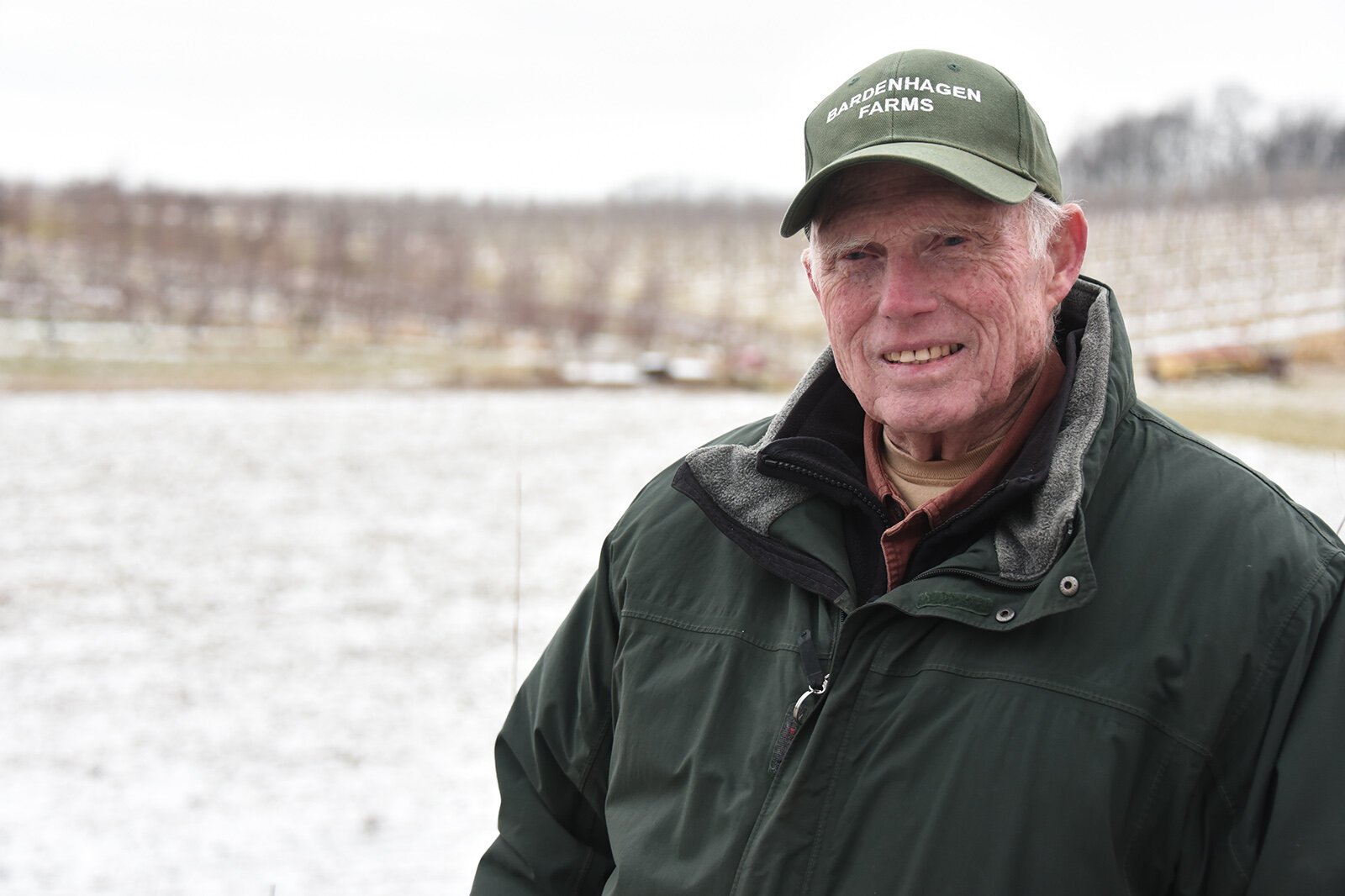
The MI Farm Cooperative aggregates 20 farms for a CSA and wholesale distribution to restaurants, schools, and grocers in Grand Traverse, Leelanau, and Benzie counties. Suttons Bay-based Bardenhagen Farms, known for table grapes, apples, plums, and apricots, is one of MI Farm Cooperative’s members. When CCF closed, farmer Jim Bardenhagen feared he would have to rip out his grape vines until the Northwest Food Coalition, a supplier to food pantries, agreed to purchase his harvest.
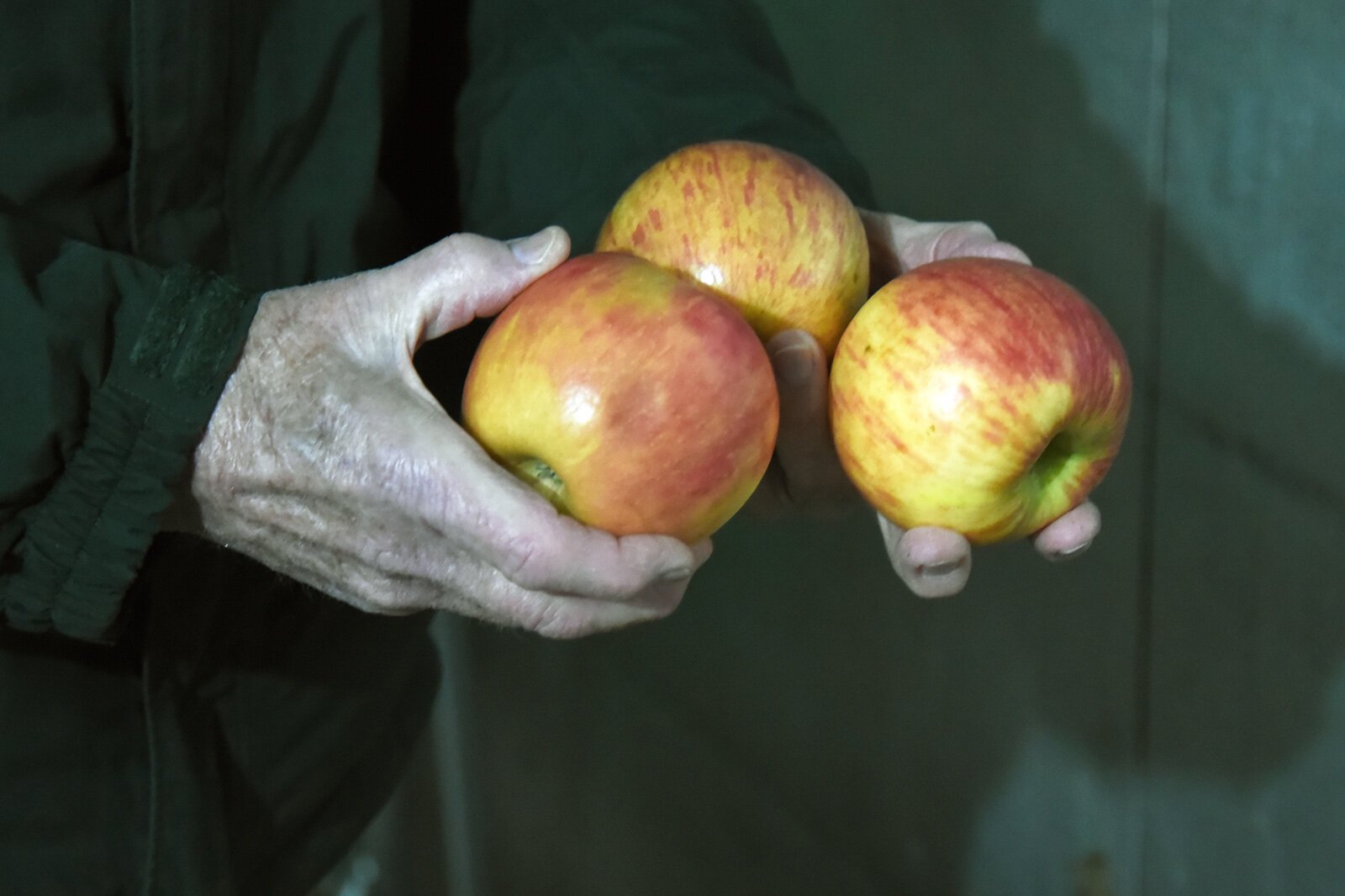
“As a co-op, we have a really wide product range. We have fruits, vegetables, and greens. People can order meat, bread, eggs, chickens, maple syrup, and cheese,” Bardenhagen says. “I sold product to Cherry Capital Foods. It helped a lot. They took apples and grapes downstate to the schools. Schools really love the table grapes. I have been trying to take a look at how we might do something in the future. I’ve been talking to folks that market downstate and I’m also talking to places that have food clubs.”
Meanwhile, Lahti and his colleagues from CCF hope that the Michigan Department of Agriculture and Rural Development (MDARD), Michigan’s legislators, and the governor’s office will recognize the need to support a sustainable intrastate distribution system for locally grown and produced foods. Lahti says policies that restrict subsidizing distributors also need to evolve, noting that Cherry Capital Foods was more than just a fleet of trucks.
“Because we were not differentiated from any other broadline distributor, we were not eligible for any federal or state funds other than the minimum that a for-profit business is offered,” Lahti says. “One of the things that we’ve been able to work on over the last year or two is really helping MDARD realize the difference between a broadline food distributor and somebody who really is moving only Michigan products.”
Estelle Slootmaker is a working writer focusing on journalism, book editing, communications, poetry, and children’s books. You can contact her at Estelle.Slootmaker@gmail.com or www.constellations.biz.
Jim Bardenhagen photos by John Russell. Jen Lewis photo courtesy of Jen Lewis.
Related Articles
Equest Center highlighted as Bank of America boosts year-round community support
Bank of America’s Day of Giving showcases its ongoing volunteer partnership with Equest Center; Lakeshore Advantage selected as bank’s 2025 Neighborhood Builder.

Retailer Hank Meijer shows off his storytelling talents at Dutch American celebration
At Dutch-American Heritage Day, retailer leader and author Hank Meijer reflects on family stories, immigrant roots, and the legacy of Fred and Lena Meijer.

It’s hard for foster kids to get the health care they need, but this project is working to change that
A Grand Valley State University project is working to create an integrated mobile care team to serve foster kids’ complex health needs.