
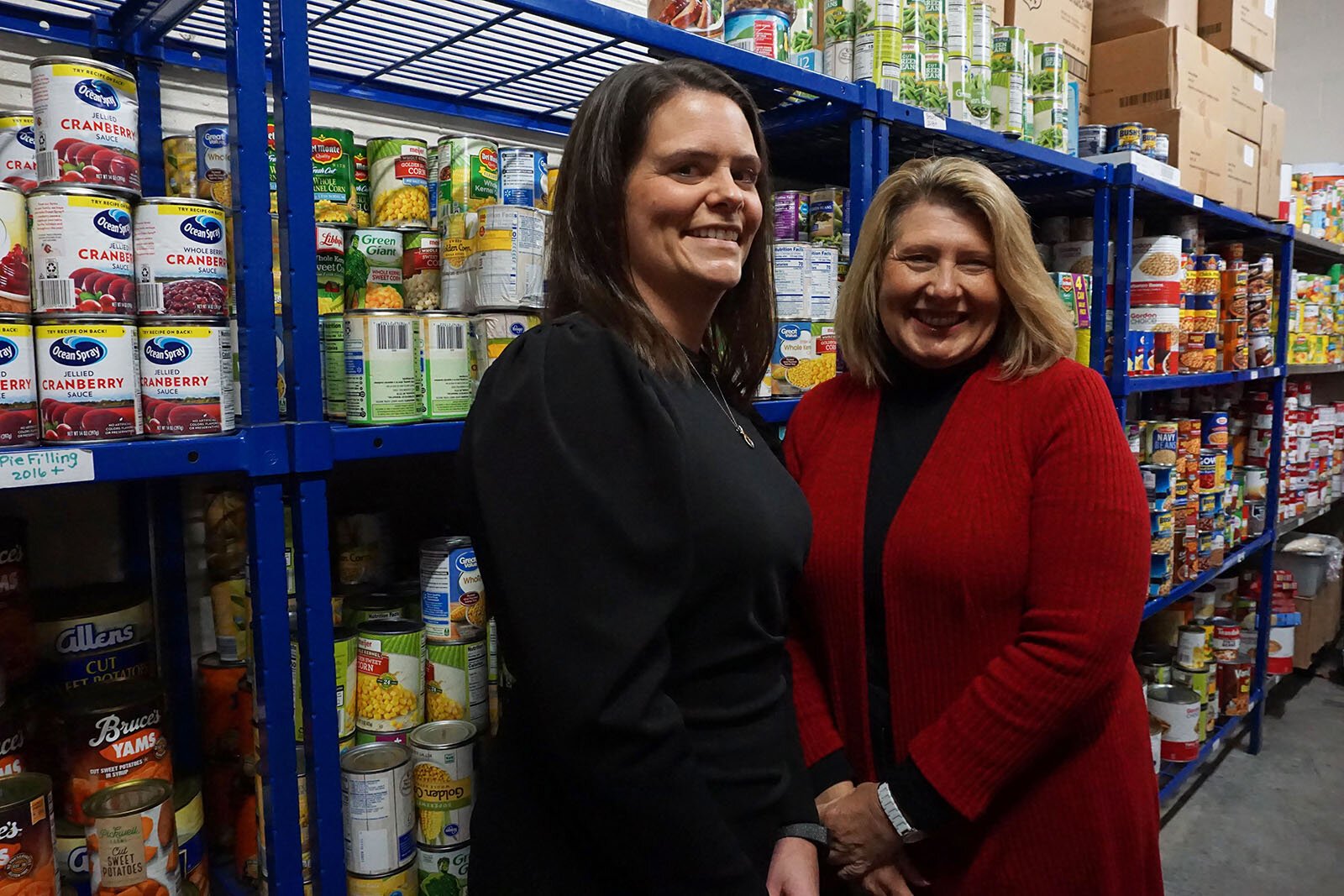
The Michigan Health Improvement Alliance is taking a new approach to addressing food insecurity in the 14 heavily agricultural counties it serves in central and eastern Michigan.
This article is part of State of Health, a series about how Michigan communities are rising to address health challenges. It is made possible with funding from the Michigan Health Endowment Fund.
More than a million Michiganders, and one in seven of Michigan’s children, face hunger. Even more experience food insecurity, meaning they are unable to access, store, or prepare nourishing food. Ironically, Michigan ranks second in the U.S. after California for agricultural diversity, but much of the state’s produce never makes it back to Michiganders’ plates, instead leaving the state for processing elsewhere.
Data confirming food insecurity and its dire impacts have been compiled time and time again in Michigan and elsewhere. That’s why the Michigan Health Improvement Alliance (MiHIA) is taking a new approach to addressing food insecurity in the 14 heavily agricultural counties it serves in central and eastern Michigan. MiHIA brings together community partners in the region with the goal of improving residents’ health and increasing the region’s economic sustainability.
When the organization undertook its latest food system scan with funding from the Michigan Health Endowment Fund, the goal was not to simply reaffirm statistics on the numbers of grocery stores in neighborhoods or how many people lived with nutrition-related chronic illnesses. Instead MiHIA sought to discover what action was needed to create real change in the regional food system. Those working on the project found that building relationships and collaborations across sectors was the best hope for creating that change. Now they’re in the process of interviewing numerous regional stakeholders to develop a long-term plan for addressing food insecurity.
“Collaborative work is going to be the piece that is going to make system changes that affect those who are food insecure,” says Tina Swanton, MiHIA executive director of community impact and strategic partnerships. “Without that, we are not heading upstream to solve root problems that are causing someone to be food insecure.”

A food systems scan through a different lens
MiHIA engaged veteran food systems researcher Meghan McDermott to do a food systems scan of MiHIA’s service area. During the fall of 2021 and spring of 2022, McDermott examined what groups were working in the food space, the region’s food production capacity, what types of food were being grown, how much of it was for human consumption, and the region’s capacity to process, aggregate, and distribute food.

“For this region’s food system in particular, there’s also land use,” McDermott says. “Because Saginaw and Bay City are the focus of this area, we wanted to think about urban agriculture.”
While the commissioned food scan addressed all of these factors, McDermott focused on the relationships among existing organizations in the region that were working on food insecurity issues.
“We wanted to go a little bit more into the qualitative rather than quantitative data with this assessment,” McDermott says. “A lot of the barriers that we encountered with different stakeholders were more interpersonal. We got a lot of sense of disconnection amongst the many different people who are trying to move local food systems and public health projects forward in a region that is quite relatively small.”
While the food scan did provide all the statistics that have been hashed over by other reports in the past, McDermott and MiHIA also saw it as a commentary on disconnection among organizations that could truly create systems change by working in collaboration. Their next step was to map out all of these organizations, their reach, and their existing partnerships. Then they interviewed representatives of the organizations individually to find out who was talking with whom. Conversations with more than 40 regional organizations have already taken place.
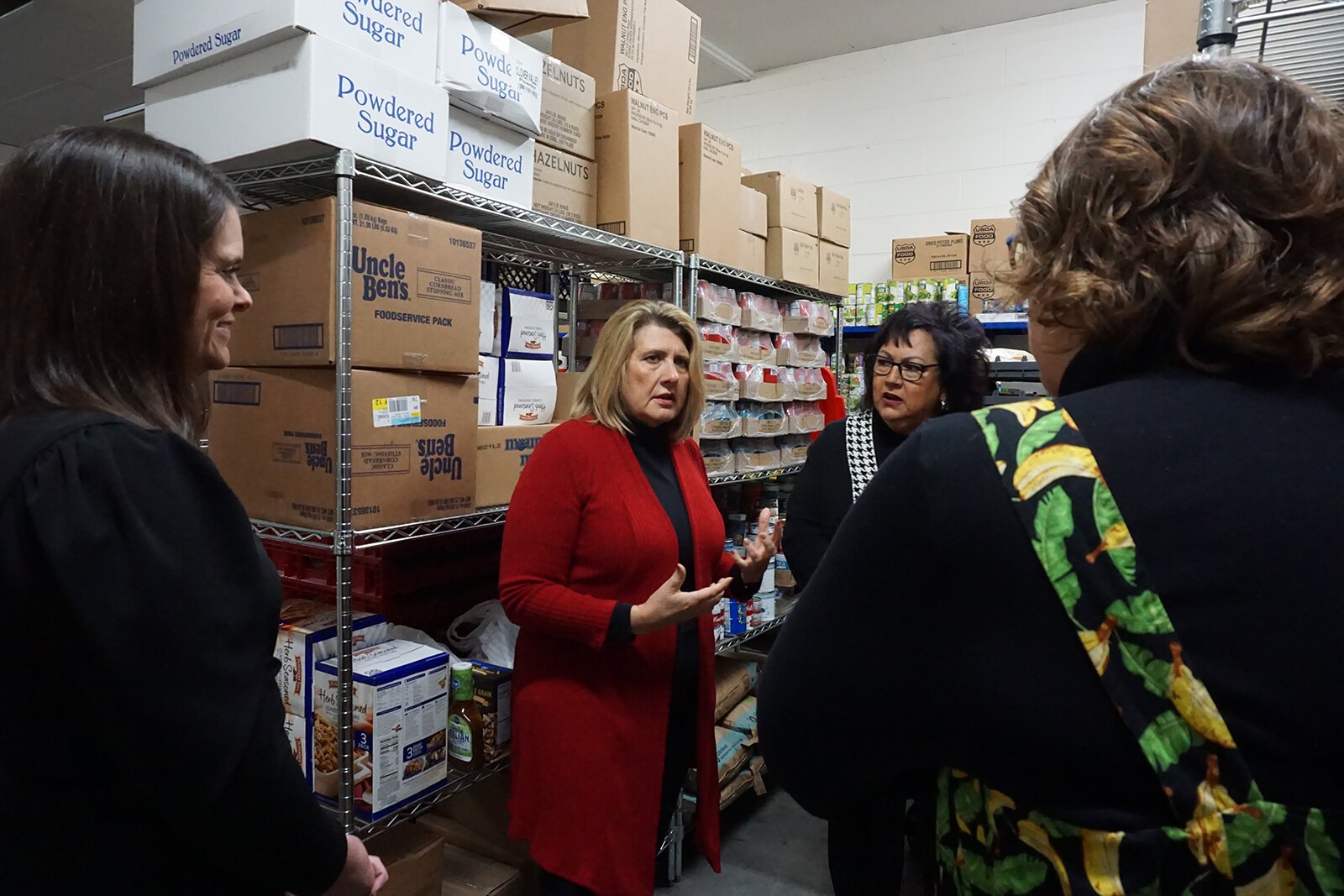
“We met with the [intermediate school districts], higher education leaders, health systems, farming organizations, economic development organizations, food policy council leaders, food rescue organizations, and food pantries,” Swanton says. “All of these organizations are coming from a good place. We need to have these conversations in order to shift from only providing emergency food to having a food system that everyone can afford and have access to.”
Collaboration as the key to keeping food local
Coaching organizations in collaboration happens to be a strength that MiHIA brings to the table. It is one of the health-focused partners in the region’s fruitful THRIVE (Transforming Health Regionally in a Vibrant Economy) alliance, which also involves municipalities, businesses, and nonprofits across four of the region’s counties.
“In order to have a strong region, you have to have a healthy region,” says Heidi Tracy, CEO of MiHIA. “Over 2018 and 2019, we looked at all of the factors and everything always leads back to food and housing. If we have great places to live, and we’re able to provide healthy food for our families, that is the basis for everything else.”

Now, MiHIA is considering ways to leverage regional collaboration to make it easier for the region to benefit more directly from its own agricultural bounty.
“When we start to look at what it means to eat healthy, we’re certainly looking at locally grown produce,” Tracy says. “What can we do as a regional health impact organization to help other organizations make that access to that kind of food source possible?”
Bringing new food processing capabilities to the region could keep more of the foods grown here closer to home, bring down their cost, and expand employment opportunities for region residents. Conversations with the 40-plus organizations have raised the possibility of a feasibility study to determine the full impacts of bringing a food processing plant to the region.
“There’s only a few food processing plants in the whole entire state,” Tracy says. “Now that we’re having that conversation, we’re learning about so many other pieces and parts and ideas around the food ecosystem. What we’re going to see is innovation and ideas that we wouldn’t think of normally, just sitting in our offices.”
Spreadsheets, data, and reports remain valuable players in creating change in the region. But McDermott, Swanton, and Tracy hope that starting conversations, building relationships, and moving forward in collaboration will create real change that not only reduces the need for emergency food but also builds the health and wealth of the region’s urban and rural residents.
“What I like about the way that we’re going about things is the way in which we’re maintaining authenticity around the idea of collective impact,” Tracy says. “That’s pulling people together and saying, ‘Tell us about what’s happening in your experience. What’s worked and what hasn’t worked?’ When you start to bring those voices together, it’s amazing. Then we can start to problem solve. When you start to have those kinds of discussions and you start to bring people together in those ways, you start to make real differences.”
Estelle Slootmaker is a working writer focusing on journalism, book editing, communications, poetry, and children’s books. You can contact her at Estelle.Slootmaker@gmail.com or www.constellations.biz.
Meghan McDermott photo courtesy of Meghan McDermott. All other photos by Crystal Gwizdala.
Related Articles
Library classes help residents learn skills, build community connections
At Kent District Library, in-person classes help residents learn practical skills while meeting neighbors and building connections in their community.
Gentex engineers help nonprofits improve efficiency
Gentex engineers apply manufacturing skills to streamline donations, boost volunteer impact, and expand services at Community Action House and Kids’ Food Basket.

The Established Home mother-daughter designers launch children’s book to help families navigate life transitions
West Michigan design duo Jean Stoffer and her daughter, Grace Start, share a new children’s book offering families practical, faith-centered strategies to help children cope with moves and change.


