
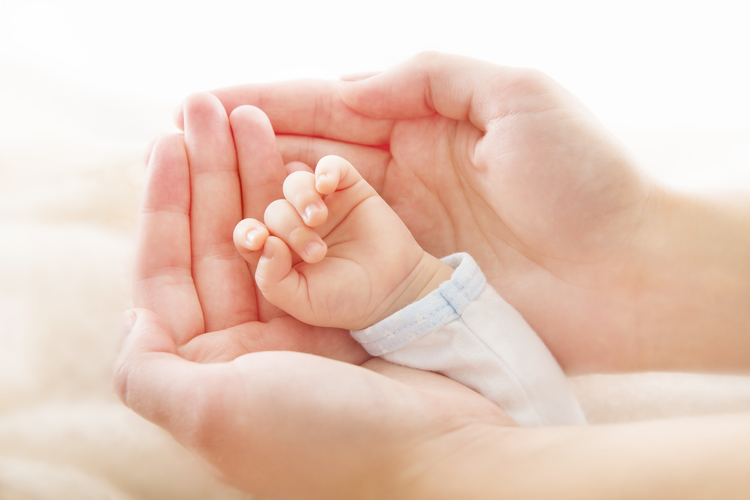
The program's goal is to identify and address the social determinant of health needs that create barriers for women with opioid use disorder.
This article is part of State of Health, a series about how Michigan communities are rising to address health challenges. It is made possible with funding from the Michigan Health Endowment Fund.
Cara* had received help with her opioid use disorder (OUD) from several programs in her community in Michigan’s Upper Peninsula. But after she became pregnant, she didn’t answer the phone when staff from these programs called her in hopes of helping her achieve a healthy pregnancy. So Cara’s name was passed along to Haley Thomas, a community health worker (CHW) with the Upper Peninsula Maternal Opioid Misuse (UP MOM) program – initiating a close, supportive relationship that successfully helped Cara get a healthy, fresh start in life.
UP MOM’s CHWs support women who live with OUD and are pregnant or up to 12 months postpartum. UP MOM is a program of Upper Peninsula Health Care Solutions. Its primary funder is the Health Resources and Services Administration. The program’s goal is to identify and address the social determinant of health needs that create barriers for these women — such as homelessness or housing insecurity, food insecurity, joblessness, or lack of transportation.
For example, when Thomas sent Cara a scripted text, Cara responded, “I need food.” Thomas brought her a food box — and they had a conversation that resulted in Cara enrolling in UP MOM. Thomas helped Cara identify the best treatment program for her needs. Because that program was three hours away and Cara didn’t have a reliable vehicle, Thomas drove her there. When Cara completed the program, Thomas picked her up and drove her home. They had lots of time to get to know each other on the way.
Thomas recalls that Cara talked about her relationships, her childhood, missing her own mother, and feeling like she was never parented herself. She admitted she had no idea of how to parent appropriately. Thomas helped her recognize how the traumatic events she had experienced triggered her desire to use opioids. Cara said, “You know, I never thought of that before.”
Thomas connected Cara with continuing outpatient therapy in her own community. She continued visiting her throughout her pregnancy and after her baby was born. Cara has “graduated” from UP MOM, but she recently gave Thomas a call.

“Now, she’s been reunited with both of her other children. She has a place to live. And she just called to say that she got a job,” says Katrina Keough, UP MOM program manager. “It’s just seven months out, and this is how far she is. We’re really proud of her.”
Cara’s story reflects the success of nearly all UP MOM participants. The program also has huge benefits for participants’ newborns – especially in the Upper Peninsula, where the rate of neonatal abstinence syndrome (NAS) is four time higher than the rest of the state. NAS is a group of conditions caused when a baby withdraws from opioids they have been exposed to in the womb.
“These women have experienced a lot before this disease existed. Some of those comorbidities are trauma, untreated mental illness, and social determinants of health. Lack of transportation is especially a barrier in the rural Upper Peninsula,” Keough says. “Many of the programs that exist are structured in a way that these health risks are not addressed or identified even though they are so crucial to the stability of physical and mental health.”
Women are referred to UP MOM through a two-way system that submits names of eligible women, every week, based on health insurance claims and diagnoses, as well as programs embedded in area health departments, such as WIC, the Maternal Infant Health Program, and Healthy Families Upper Peninsula.

“We’re working to have all of those programs offer UP MOM to all moms, whether or not it’s known that they have a history of opioid use disorder,” says Andy Chosa, Upper Peninsula Health Care Solutions grant administrator. “We know, oftentimes, women don’t feel comfortable coming forward with that information.”
Home visits are key
During her initial visit with a new UP MOM client, Thompson first makes sure that the woman qualifies for the program by having an active substance use disorder (SUD) involving opioids or history of opioids misuse.
“Having that conversation is often very difficult. They are used to that question being asked in a derogatory or judgmental way,” Thomas says. “The point of us asking that question is because we do want to help. We’re helping a population that most everybody else chose not to help.”
Next, Thomas uses a screening questionnaire to determine the woman’s social determinant of health needs: do they have adequate food, secure housing, employment, and transportation to health care appointments, treatment, or work?
“Our home visits are the time where I get to connect with our clients, one on one,” Thompson says. “It’s a free space, a safe space for them to be able to really be themselves and talk about their fears, talk about their needs, be vulnerable.”
During follow-up visits, Thompson may help clients print out and complete housing applications, pay off past-due bills preventing them from being approved for housing, or take them to county clerks’ offices to get documents, like birth certificates, that are needed to complete applications. To complete the process, UP MOM provides first and last month’s rent and security deposits.
“We offer support for very basic needs,” Chosa says. “Housing and transportation are both so highly connected to health outcomes and the ability of moms to take care of themselves and their infants. We’re helping them address those needs at a higher level than some other programs might allow.”
Thompson checks in weekly with her clients, throughout their pregnancies and for at least a year after they give birth. Her check-ins don’t always involve a home visit. She respects that the moms she works with have busy lives. Many times, a phone call or text works best.
“Their schedules are often chaotic,” she says. “They may have other children to take care of. They may be working full-time on top of parenting full-time. Some are trying to make it back to school.”
When moms need items delivered, such as food boxes or diapers, Thompson takes the opportunity to chat with them to see if there’s anything else they need.
“My job is to give them the confidence to walk into a room and feel whole, feel like they deserve to be the person that they want to be,” Thomas says. “I use an exercise with them a few times throughout the course of time they’re with me. I tell them, ‘I want you to close your eyes. Imagine you’re holding a ball. And the ball is the life that you imagined for yourself. Your best life. You can’t imagine anything better than what you’ve got in front of you. What does that look like?’ And, you know, what they see inside that ball isn’t ever addiction.”
UP MOM works
Chosa was thrilled with the results of a recent evaluation of the program. UP MOM has improved health outcomes, gotten moms engaged in evidence-based home visiting programs, improved compliance with pre- and post-partum OB-GYN recommendations, and increased engagement with SUD treatment. In addition, all women enrolled in UP MOM prenatally initiated breastfeeding — a huge win for the mental and physical health of mothers and babies alike. During the infant formula shortage crisis, Chosa notes, UP MOM CHW lactation consultants even helped two moms to re-lactate, or re-establish their milk supply, after they had initially quit breastfeeding.
“[UP MOM participants] care about their babies, and they care about their pregnancies. But the impact of the disease that is opioid use disorder is so great,” Keough says. “So if they don’t have a roof over their heads or their next meal, looking at physical or mental health is not something that they are able to even acknowledge. They’re moving from one crisis to another. UP MOM becomes a buffer, a helping hand, and that calm in the storm.”
*Name changed to protect privacy.
Estelle Slootmaker is a working writer focusing on journalism, book editing, communications, poetry, and children’s books. You can contact her at Estelle.Slootmaker@gmail.com or www.constellations.biz.
Lead photo by Adobe Stock. Other photos courtesy of the subjects.
Related Articles
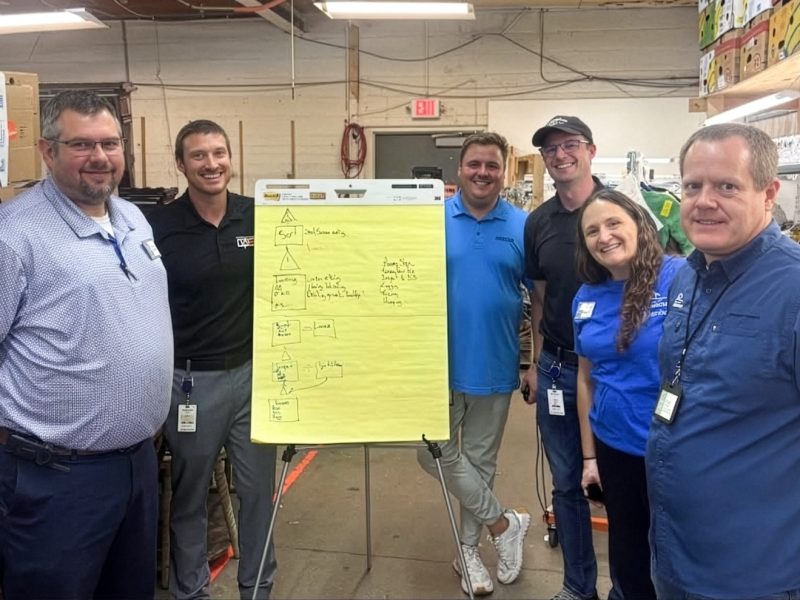
Gentex engineers help nonprofits improve efficiency
Gentex engineers apply manufacturing skills to streamline donations, boost volunteer impact, and expand services at Community Action House and Kids’ Food Basket.
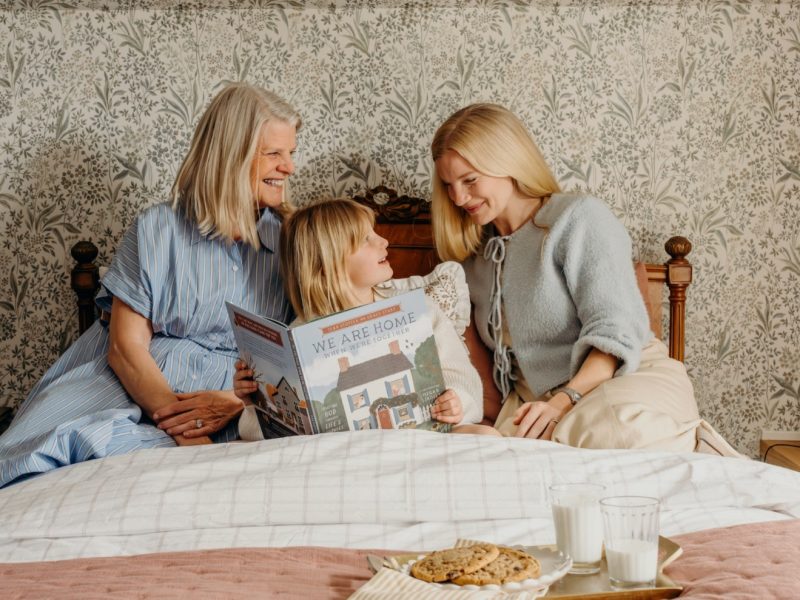
The Established Home mother-daughter designers launch children’s book to help families navigate life transitions
West Michigan design duo Jean Stoffer and her daughter, Grace Start, share a new children’s book offering families practical, faith-centered strategies to help children cope with moves and change.

#RG20LookBack: The Grand River is having the moment we imagined—together
In his 12th #RG20LookBack column, Rapid Growth publisher Tommy Allen revisits the 2008 story, “A River Runs Through Green Grand Rapids,” which now reads like an early spark for everything unfolding along the Grand River today.


